SÜSS MicroTec looks beyond the cycle
It is a good sign when a company has a long-term strategy and vision based on well-founded expectations. At its Capital Markets Day in February 2023, SÜSS MicroTec expressed its ambition to take significant steps over the next seven years and double its revenue with existing and new products.
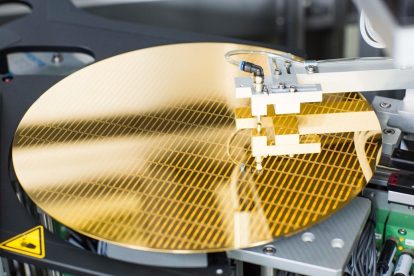
SÜSS MicroTec builds machines for the chip industry, an activity in which the Netherlands excels, with companies such as ASML, ASMI and Besi. Like these companies, Germany's SÜSS holds strong market positions, albeit in somewhat smaller markets. Its product portfolio consists, for 90% of revenue, of machines for both the front-end (chip production) and back-end (chip assembly) process. SÜSS's market share varies by market and can reach more than 80% in a niche market. SÜSS makes lithography and wafer-bonding machines for a preparatory stage of the chip assembly process. It also makes machines used to clean the most advanced lithographic photomasks used in chip production. The remaining 10% of revenue comes from SÜSS MicroOptics, a Swiss subsidiary that produces optical components for automotive and industrial end customers. This business is capital-intensive, has few synergies with machine building, and even competes with SÜSS MicroTec's own customers — which is why we pushed more than two years ago for the sale of this non-core unit. The company has since come to the same conclusion and is now looking for a buyer. This will allow SÜSS to focus entirely on its core task in the future: developing and producing machines.
In 2018, at its Capital Markets Day, the company set a long-term revenue target: within seven years, by 2025, it envisioned revenue of €400 million. Since SÜSS's 2018 revenue was around €200 million, the market considered the target unachievable. 2025 is now not far off. The company is performing well, and incoming orders in 2022, at €446 million, were already well above the envisioned revenue level. SÜSS has recently raised its ambition, stating that it wants to double this year's expected revenue of €340 million to a level of around €600-700 million before 2030. This ambition is based on the sum of expectations for current markets as well as new markets. For example, SÜSS wants to apply its successful photomask-cleaning technology to cleaning wafers, in an environmentally friendly way without the use of chemicals. With this stated ambition for the next seven years, SÜSS is looking beyond a single cycle in the semiconductor industry, which typically lasts around two to four years.
Alongside revenue growth, SÜSS is also pursuing profit improvement: an operating margin of 15% by 2025, and somewhat higher in the years after that. This is a substantial improvement on the current 10%, and herein lies the company's biggest challenge. SÜSS's technology is very advanced, but the way its machines are assembled is rather old-fashioned. SÜSS is aiming primarily for shorter assembly and delivery times and a higher gross margin on its machines. There are many internal challenges, such as modular product design, more component outsourcing, lean production, better procurement and logistics processes, and building a local supply chain in Asia. The company has already taken steps over the past two years to implement improvements, but this takes time, always longer than hoped, and is made harder by supply chain shortages. The first results of these improvements are therefore not yet clearly visible. Fortunately, SÜSS's customers are very satisfied with the performance of its machines, giving the company time to fully implement its operational improvements and raise its profit margin.
The industry outlook is positive for the medium term. Large sums are being invested globally in new chip production plants and new production technology such as SÜSS's. Over the next seven years there will be many developments driving further digitalisation, such as artificial intelligence, augmented and virtual reality, and electric and self-driving cars — developments that have been known for years but now seem to be taking off, and that require many (advanced) chips. For SÜSS, we see sufficient opportunities over the next seven years to double revenue again. If it also succeeds in modernising its (production) processes, the company will, in our view, remain a good investment in the years ahead.
Teslin holds a stake in SÜSS MicroTec through Gerlin Participaties Coöperatief UA.